The Ultimate USB C Cable Buying Guide

The Ultimate USB C Cable Buying Guide

While the average shopper would be forgiven for believing that all USB C Cable brands were made equally, in reality – this couldn’t be further from the truth.

The humble USB (Universal Serial Bus) was originally developed and introduced in 1996, with the aim being to set up a communication method between a computer and peripheral devices by replacing many varieties of serial and parallel ports.

In the olden days, plugging something into your computer – a mouse, a printer, or a hard drive – required a zoo of cables. After the USB was invented, it wasn’t long before floppy disks and CD-R drives soon began to die out, but the power of the technology didn’t stop there.

As the OG of the USB world, USB-A cables are essential for almost every type of computer based ‘add on’, such as keyboards, mice, wireless adapters, and external hard drives. Seen as an upgrade to the standard USB Type A cable, the USB-C cable was soon developed to connect and power many types of smartphones, tablets, and other mobile devices thanks to the ability to transfer audio, video, and text data.

How To Choose The Right USB C Cable

Despite the fact that a USB C cable has the power to charge and transfer data between a wide range of devices, there are still three key points of difference that shoppers need to note before making a selection: data transfer speed, power and cable length.

Where a USB C cable purchase gets tricky is in the numbers that get attached to the ports. The most common speed that USB C connectors are rated for is 10Gbps, or theoretically, twice as fast as the original USB 3.0. USB C ports that support this peak speed are called “USB 3.2 Gen 1×2”.

The reason paying attention to this matters is because a USB C cable with 3.1 Gen 2 capabilities will take just five seconds to transfer a HD movie at 10 Gbps, whereas an older 2.0 version will take 1.7 minutes at a much lower rate of 480 MBps.

In addition to speed, different USB C cable types will also have different power levels. While all USB C cables must be able to carry a minimum of 20V 3A, some products also offer a higher electrical load at 20V 5a – meaning that devices will charge faster.

The biggest difference between 3A and 5A cables is 5A cables can generally power laptops and monitors, while 3A cables cannot. If you’re looking for options to transfer photos and music between devices or charge smaller devices like a smartphone, then a 3A cable should be sufficient.

Finally, be sure to consider how long you need your USB C cable to be. As a general rule, the faster the speed of a USB C cable, the shorter it should be due to the electrical characteristics inherent to high speed data transfer. As such, cables are usually available in lengths of one metre, two metres or four metres.

If you can manage to tick off all of these boxes before you make a purchase, the good news is that if you invest in a few high quality USB C cables, they will generally work with anything and everything that supports them, regardless of the device’s year, model or generation.

To avoid making the emergency dash to your nearest service station in the middle of the night when a sub-par USB C cable dies, be sure to do your research on the many products out there. As an example, our SOS USB data cable is purposefully designed for heavy duty charging and data transportation, and the 1.2 metres braided cables with a long rubber sleeve to help stop the plugs from bending too much. To find out more, be sure to check out your nearest SOS Phone Repairs store.


Talk Tech Upgrades With The Professionals

SOS Phone Repairs are specialists in high-quality, cost-effective phone repairs, tablet repairs, and PC repairs, all backed with a six month warranty. Founded in 2015 in Coffs Harbour and now with over sixteen outlets located all over Australia, our primary driving factors remain the same: people and phones.

Whether it’s to get a few more years out of your trusted iPhone, to fix one up to sell, assistance with a repair, or even finding the right accessories such as a USB C Cable, SOS Phone Repairs have a wide variety of products and services on offer in each of our outlets.

If you are on the hunt for a quote, diagnostic, or even just some good old fashioned, friendly advice, please don’t hesitate to get in touch or give us a call today at SOS Phone Repairs.
 

Five Types Of Sustainable Smartphones

With a growing number of people paying attention to their carbon consumption, it makes sense that options for sustainable smartphones are soaring in demand.

While automotive production may be the sector that dominates the headlines for emissions, did you know that the tech industry is responsible for tons of electronic waste, and generates between 2% to 3% of the world’s greenhouse gas emissions?

Sustainability has become a huge factor for many consumers, and a growing number of us are putting our money where our mouths are. While it’s gotten to the point where it’s almost impossible for brands to ignore this shift in sentiment, which brands are responsible for producing sustainable smartphones?

Our Buying Guide For Sustainable Smartphones

In the simplest of definitions, environmental sustainability is classed as meeting our own needs without compromising the planet for future generations to ultimately do the same thing. In a nutshell, the concept is to not inflict any further damage to the earth than what we’ve already managed to do.

When applied to sustainable smartphones, many brands are making a more conscious effort by changing how they produce, ship, and package devices. As most of the emissions that come from smartphones (83%) originate from manufacturing and shipping, producing a sustainable smartphone takes a lot more than using less plastic in the packaging – so what are our top picks, and why?


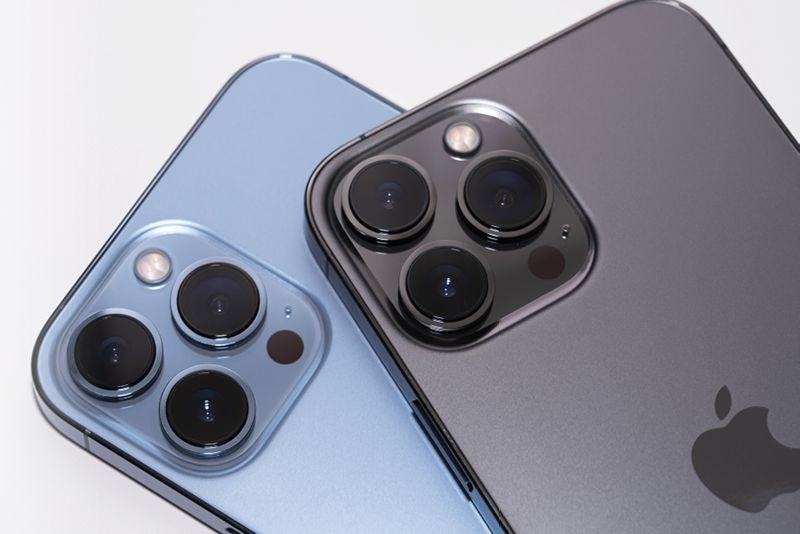
Apple 13 Pro – While Apple still has a long way to go before it can be referred to as an eco-friendly brand, the company is actively working towards hitting its 2030 carbon neutral target. As such, the Apple 13 Pro is made with 99% recycled tungsten (or wolfram), and its other rare earth elements are 98% recycled. According to Apple, the model uses less than half of the energy of its predecessor, the iPhone 12.


Motorola Edge – Famous for their flip phone that dominated the 2000s, Motorola has somewhat dropped off the map for consumers who now favour Apple and Samsung products. For shoppers on the hunt for sustainable smartphones, the Motorola Edge is a worthy offering though, as the company has removed mercury or cadmium from the batteries of all phones, and it’s also replaced harmful plastic PVC and BFR, a mix of synthetic chemicals.


Samsung Galaxy S22 – As the company’s premier option for sustainable smartphones, 20% of a standard Galaxy S22 model is made from reclaimed fishing nets – one of the biggest sources of ocean plastic pollution. In addition to this unique selling point, there are also recycled post-consumer materials in the speaker, volume, and power keys, while all product packaging is made from 100% recycled paper and plastic materials.


Teracube 2E – For consumers who want a standard phone without the bells and whistles found in the more expensive models, the Teracube 2E is a high-concept phone with an admirably long warranty and some serious environmental credibility. Aside from being made from recycled polycarbonate with a biodegradable phone case, it also requires 50% less packaging than the competition. What’s more, is that for every phone sold, Teracube plants a tree.


Google Pixel 6+ – Beginning in 2022, Google has stated that all its products will include recyclable materials and is committed to making sustainable smartphones. As such, more recent models like the Google Pixel 6 and 6 Pro contain at least 45% post-consumer recycled plastic, and the case is also made with 70% recycled plastic. It’s also using recycled aluminium in the housing of the Pixel 6, and the Pro version uses 100% recycled content.

If you can’t be bothered to sell or fix your existing phone to sell to a friend, family member or even a stranger, another alternative is to leave it to the professionals to recycle. Many phone repair stores, such as your nearest SOS Phone Repairs, are always on the lookout for devices that need a little bit of love, as they already have a wide customer base looking to purchase second hand items from reputable outlets.


Talk Tech Upgrades With The Professionals

SOS Phone Repairs are specialists in high-quality, cost-effective phone repairs, tablet repairs, and PC repairs, all backed with a six month warranty. Founded in 2015 in Coffs Harbour and now with over sixteen outlets located all over Australia, our primary driving factors remain the same: people and phones.

Whether it’s to get a few more years out of your trusted iPhone, to fix one up to sell, or to repurpose an old one as a gift, repairing a smartphone might just be easier and cheaper than you think. However, if you’re in the market for a new smartphone, SOS Phone Repairs also stocks a wide variety of refurbished handsets at a fraction of the cost of a brand new one.

If you are on the hunt for a quote, diagnostic, or even just some good old fashioned, friendly advice, please don’t hesitate to get in touch or give us a call today at SOS Phone Repairs.